
As the world is becoming increasingly digital and financially complex, it is imperative to teach children good financial habits early in life. Opening and managing a savings account is an effective way to introduce kids to the intriguing world of finance. We will analyse the importance of teaching children financial responsibility and offer practical tips on how to save and manage a savings account, setting them on the path to a secure financial future.
Financial responsibility is one of the most important skills to bequeath to your child. If taught early in life, the kids go on to become financially responsible adults who are well-grounded in money management. They also learn other aspects of financial management, such as saving, budgeting, delayed gratification, prudent spending, and investing for the future.
Benefits of Early Financial Education
- Setting the foundation for financial literacy
Financial literacy is a skill that can benefit people throughout their lives. Teaching children about money from a young age sets the groundwork for a solid financial future. Exposing children to fundamental financial concepts like earning from honest work, saving, and spending teaches children the value of money and the importance of making sound financial decisions
2. Promoting financial responsibility and independence
Breaking down the complex world of finance to kids by opening a savings account for them promotes responsibility and independence. Creating a budget, setting goals and practising delayed gratification are all essential life skills that children develop as they learn to manage their finances. These skills are not only useful for their current situation but also help them succeed in the future.
3. Making informed decisions
Kids who are taught financial literacy early grow up to become better decision-makers. They know how to use the data available to them to make informed decisions about financial planning and money management
4. Better understanding of the digital landscape
Today, most financial transactions are done online. Teaching children about savings by exposing them to digital banking platforms such as Mintyn. Making them more comfortable navigating the digital landscape. This early exposure equips them with the tools they will need as adults, ensuring that they manage their finances effectively.
What is a savings account?

A savings account is a type of deposit account operated by banks and other financial institutions that yields interest. The interest paid on them is usually little, but they are safe, reliable and easy to manage, making them an excellent choice for storing cash for short-term use.
Some banks put restrictions on the savings account in order to limit the amount and frequency with which you can withdraw money. However, its flexibility makes it an ideal source of emergency funds. Opening a savings account is also a way to store money to meet short- and medium-term goals like school fees and healthcare.
Understanding the Various Types of Savings Account
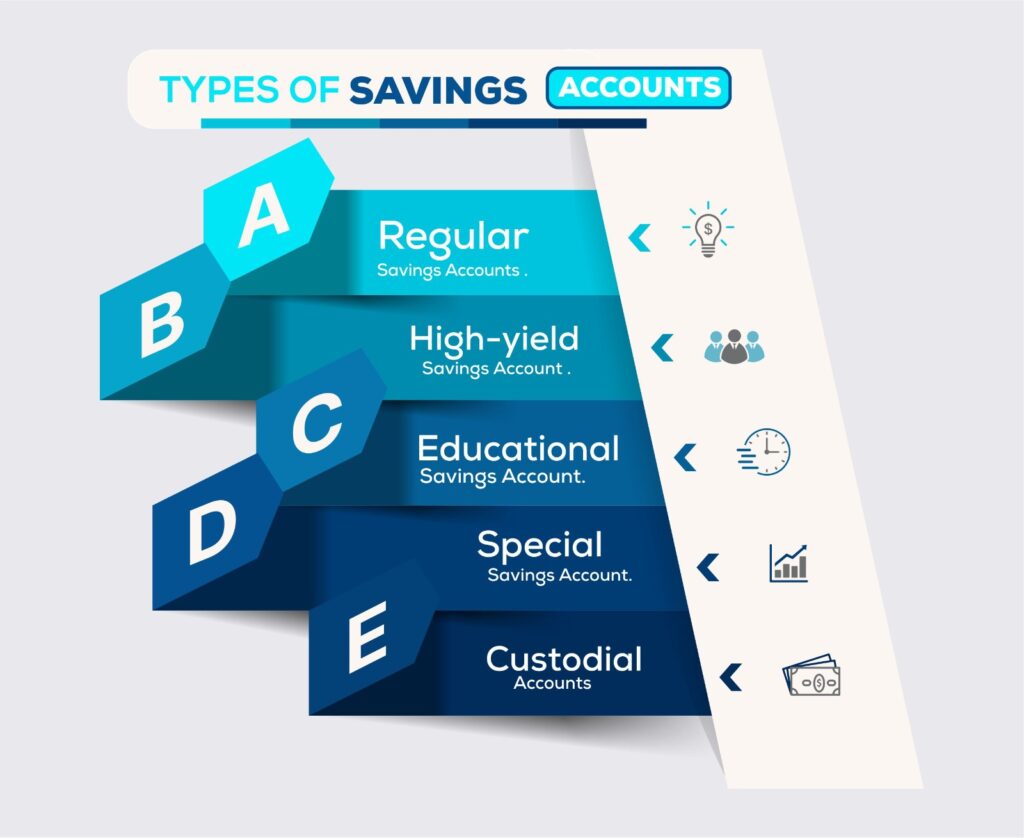
Before we delve into savings account tips, it is important to understand that there are several kinds of savings accounts obtainable for children. Having a proper understanding allows parents to select the account that is most suitable and that aligns with the financial goals they have for their child.
Regular Savings Account
When you think of opening a savings account, the regular savings account readily comes to mind. It is obtainable at most commercial banks and financial institutions. Banks pay interest on your money when you operate this account. Although the interest rates are slightly lower than what is obtainable for other savings products offered by banks. Most banks offer incentives for customers willing to open a regular savings account, such as free debit / ATM cards.
High-Yield Savings Account
This type of savings account allows you to earn a higher interest rate on your money than you would with a regular savings account. It is preferred by those who want to maximise the interest payable. Alongside providing better interest rates, they also offer fewer fees for account maintenance and have a larger withdrawal limit.
Educational savings account: This is a special account that parents can operate to help offset the tuition and school fees of their children. Some parents open these accounts when the children are born and continue to save money in it towards their university education. One of the incentives for opening an educational account is the ability to access emergency loans.
Custodial accounts: as the name implies, this type of account is set up on behalf of a child and managed by their parents or a legally appointed guardian. The child will have access to the account when he/she turns 18, depending on the laws of the state.
Special Savings Account
This is actually where our focus is. A special savings account is ideal for individuals who have a particular savings objective. There are different types of special savings accounts, such as:
- Children’s Savings Account
- Educational Savings Account
- Medical Emergency Savings account
- Custodial accounts
- Retirement Savings Account
Children’s savings accounts are typically opened by parents on behalf of their children. It encourages them to save and promotes better money management. Parents can show the kids their bank statements periodically so that they can see how their money is growing. Many banks offer this type of savings account and regularly organise funfairs for children to sensitise them about saving and to market the account type to their parents.
Factors to Consider When Opening a Savings Account
Interest rates and fees
In order to choose the right savings account for your child, it is critical to consider the interest rates and fees on the account. Parents should research, compare, and analyse these factors across different banks to ensure that they get the best out of the savings account and that the money can grow at an optimal rate. Many banks offer savings accounts specifically designed for kids with beneficial conditions that encourage children to enjoy the advantages of saving.
Unveiling the principle of compound interest
Most kids, by the time they are done with elementary school, have heard about simple interests. Now imagine putting this into practice by teaching them about compound interest and showing them how money can be multiplied and made to grow over time, especially if they are consistent with saving.
Tips for Teaching Financial Responsibility to Kids
Have a clear goal
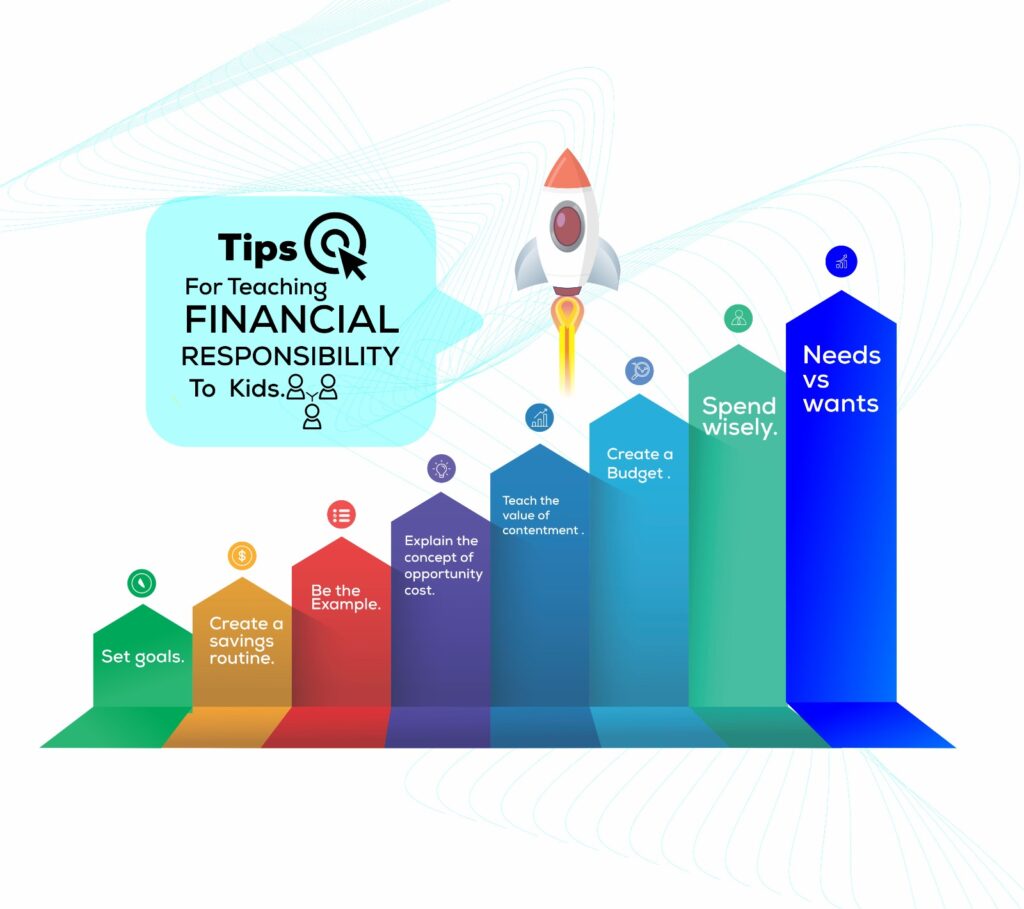
Establish clear goals for saving; having a specific target gives the kids a sense of purpose and motivation. It will encourage them to remain consistent in saving, and they can plan for the things they love, like toys and gadgets, while their parents can rely on it for future educational expenditures. Periodically reviewing and modifying these goals teaches children the importance of revising their plans to match their current financial status.
Be the example
One of the greatest ways in which children learn is through observation. Research by the Consumer Financial Protection Bureau (CFPB) found that financial habits are formed in children between the ages of 3 and 12. Children observe their parents to see how they handle money, how they spend money, and how they make financial plans. It is important to set a good example for your kids to follow.
Explain the concept of opportunity cost.
Opportunity cost simply means forgoing one thing for another. Take time to explain this concept to your kids. Let them understand that, for example, if you get the Lego toy, you will not get the video game. This will teach them to weigh their decisions and to choose wisely what is necessary at a particular time.
Help them create a budget
Budgeting helps control spending and assign limited funds to where they are most needed. Learning this skill early in life cannot be overemphasised. Children must be taught how to plan for the funds they have, no matter how little they have.
Monitor and review progress
Regularly reviewing the progress made helps keep kids on track and gives them a sense of accomplishment. Monitoring their progress helps identify areas for growth and if the saving strategy needs to be modified. This scrutiny encourages accountability and self-reflection. Parents can take advantage of these sessions to discuss milestones, address challenges, and celebrate successes, ultimately promoting good financial responsibility.
Spend wisely
Financial responsibility does not only entail saving; it is also about making wise decisions about spending. Teach kids to find the right balance between spending and saving. They should weigh different options before making a purchase. This will enable them to make informed spending decisions.
Discussing needs vs wants

Comprehending the distinction between needs and wants is a crucial aspect of financial literacy. Communicate with children about essential needs and unnecessary wants. This will help them prioritise their spending and allocate funds to things that are really important.
Furthermore, utilise every opportunity to teach financial responsibility, including when you have made mistakes. Sometimes mistakes are inevitable; it can be a wrong investment, inaccurate projections, or just financial decisions that become unfavourable. These experiences can become wonderful opportunities to learn and, invariably, teach. Instead of shying away from them, discuss mistakes openly with children. It will help them build resilience and better manage financial upheavals that may occur later in life.
As children grow older, it becomes imperative to introduce them to the value of making investments and teach them about stocks, bonds, and mutual funds. Although a savings account is a stable and safe option for money management, taking calculated risks in the form of investments is also an aspect of financial responsibility. Teaching them early about investments broadens their understanding of the financial world and helps them make informed decisions in the future. However, keep it simple and relevant to their age.
Parents can gradually increase the financial responsibility given to children. Entrust them with dealing with a larger part of their expenditures. Involve them in the decision-making process of how much to save, and introduce incentives like allowing them to earn money for doing some household chores like mowing the lawn. Older kids can get a part-time job or work during school holidays. They will gradually learn to become independent, paving the way for becoming adults who are financially literate and practice better money management
Conclusion
Teaching children the important skill of financial responsibility through opening a savings account for them is a rewarding investment in their future. By fostering good financial habits in their children early in life, parents can help them make smart choices, explore the digital financial environment, and ensure a secure financial future. These practical strategies will help parents guide their children towards financial literacy and responsibility. It is the responsibility of parents to provide the next generation with the necessary financial skills, which will ultimately help build a society that is stable and financially secure.