
The current value-added tax rate in Nigeria is 7.5%, and it applies to most taxable goods and services across the country. Whether you run a small business, manage a growing company, or simply want to understand the taxes included in your purchases, knowing how value-added tax in Nigeria works can help you make better financial decisions and stay compliant with tax regulations.
However, not every product or service attracts VAT. While some goods and services are taxed at the standard VAT rate in Nigeria, others qualify for zero-rating or exemption under the law. As a result, understanding the difference can affect pricing, tax planning, and overall business costs.
In addition, the Federal Inland Revenue Service (FIRS) requires eligible businesses to register, collect, and remit VAT within specified deadlines. Therefore, business owners need to understand not only the current Nigerian VAT rate but also how VAT is calculated and reported.
What Is Value Added Tax in Nigeria?
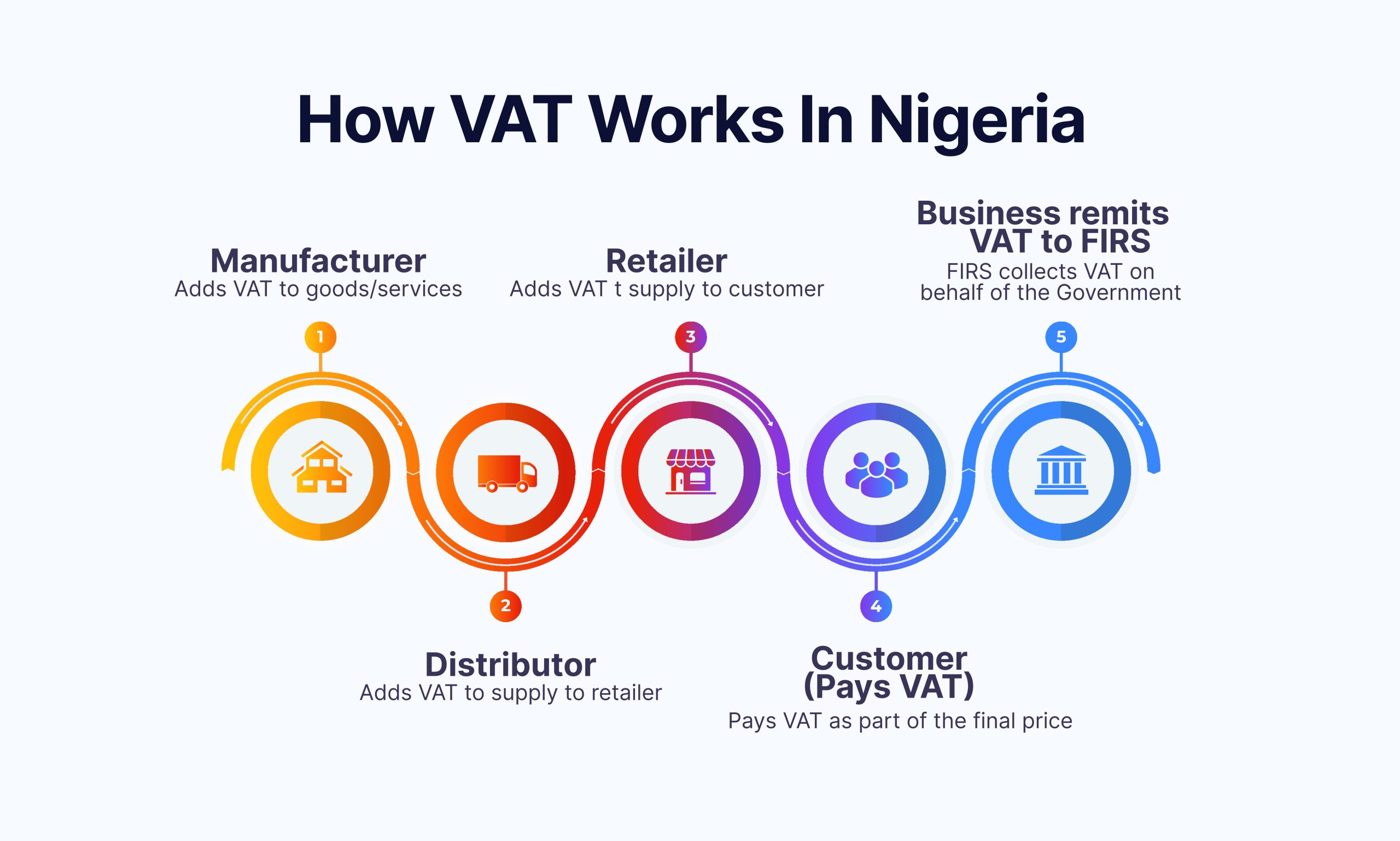
Value-added tax (VAT) is a consumption tax charged on eligible goods and services at every stage of the supply chain. In simple terms, consumers pay the tax when they buy a product or receive a service, while businesses collect and remit the tax to the government.
The Federal Inland Revenue Service (FIRS) administers and collects VAT on behalf of the government. Consequently, registered businesses must charge VAT on taxable sales, keep proper records, and file VAT returns within the required timeframe.
Unlike some direct taxes that target income or profits, VAT and tax systems work differently. VAT applies to consumption rather than earnings. Therefore, the more taxable goods and services a person purchases, the more VAT they pay.
For example, when a business sells a taxable service worth ₦100,000, it adds VAT at the applicable rate and collects the total amount from the customer. The business then remits the VAT portion to FIRS after accounting for eligible input VAT.
It is also important to understand that VAT value-added tax rules do not apply equally to every product or service. While many goods and services attract VAT, some qualify for zero-rating, and others remain completely exempt. As a result, businesses must know which category their products or services fall into to avoid compliance issues and incorrect tax calculations.
Current VAT Rate in Nigeria (2025 and 2026)
The VAT rate in Nigeria is currently 7.5%. This rate applies to most taxable goods and services supplied within the country. As of 2025 and 2026, the Federal Inland Revenue Service (FIRS) continues to administer VAT at this rate unless new legislation changes it.
Nigeria increased VAT from 5% to 7.5% on 1 February 2020 through the Finance Act 2019. Since then, the rate has remained unchanged. Therefore, businesses, consumers, and service providers continue to calculate VAT at the 7.5% rate on taxable supplies.
Although many people search for the VAT rate in Nigeria for 2025 or 2026, the answer remains the same: the standard rate is 7.5%.
Here is a quick overview:
| VAT Category | Rate |
| Standard-rated goods and services | 7.5% |
| Zero-rated supplies | 0% |
| VAT-exempt supplies | No VAT applies |
However, the standard rate does not apply to every transaction. While some products attract VAT at 7.5%, certain essential goods and services qualify for zero-rating, and others are exempt altogether. As a result, businesses should always determine the correct VAT before issuing invoices or calculating tax obligations.
Goods and Services That Attract VAT
The standard value-added tax rate in Nigeria is 7.5% and applies to most taxable goods and services supplied within the country. Therefore, if a product or service does not fall under the zero-rated or exempt categories, it will generally attract VAT.
For businesses, identifying taxable supplies correctly is important because it affects pricing, invoicing, recordkeeping, and tax compliance. Moreover, charging the wrong VAT rate can lead to filing errors and potential penalties.
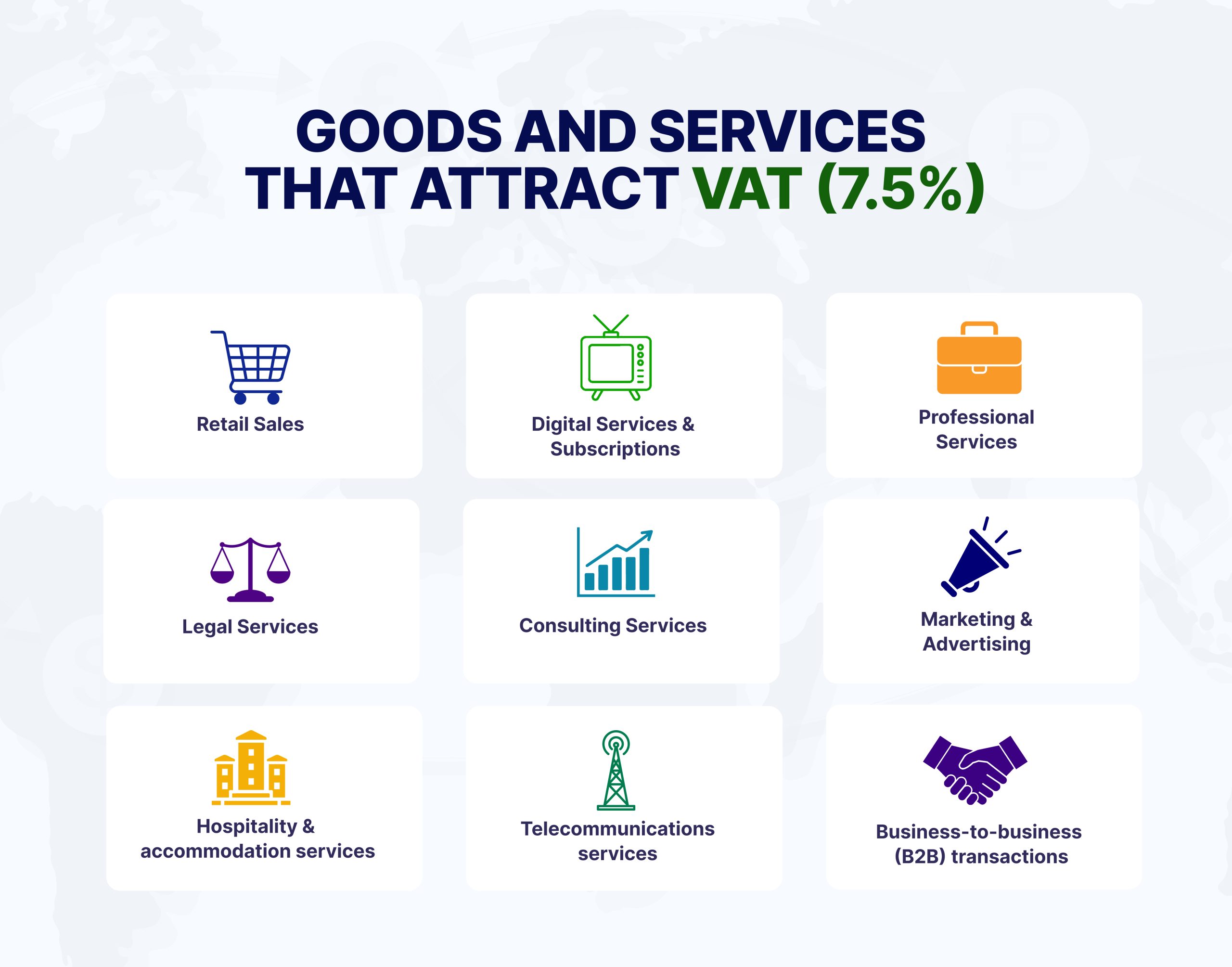
For example, if a marketing agency charges a client ₦200,000 for a service, the agency will typically add 7.5% VAT to the invoice. Likewise, a retailer selling taxable products must include VAT in the final selling price or show it separately on the invoice.
However, as a business owner, you should not assume that every item is subject to VAT. While many products and services fall under the standard rate, some essential items receive special treatment under Nigerian tax laws. Consequently, understanding the distinction between taxable, zero-rated, and exempt supplies can help businesses avoid costly mistakes.
This distinction becomes even more important when dealing with VAT for food, healthcare-related products, educational materials, and export activities.
VAT-Exempt and Zero-Rated Supplies: What’s the Difference?
Many business owners use the terms “zero-rated” and “VAT-exempt” interchangeably. However, they are not the same. In fact, understanding the difference can affect how much tax a business ultimately pays and whether it can recover VAT on business expenses.
Zero-Rated Supplies (0% VAT)
Zero-rated supplies attract VAT at a rate of 0%. Although customers do not pay VAT on these items, businesses can still recover the VAT paid on related purchases and operating expenses.
Common examples include:
- Basic food items
- Certain medical and pharmaceutical products
- Educational materials
- Exported goods and services
For example, a company that exports goods outside Nigeria may charge VAT at 0% while still claiming input VAT incurred during production and distribution. As a result, zero-rating can help reduce overall business costs.
VAT-Exempt Supplies
VAT-exempt supplies fall completely outside the VAT system. Therefore, businesses do not charge VAT on these goods or services. However, unlike zero-rated supplies, they cannot recover VAT paid on related business inputs.
Examples of VAT-exempt supplies include:
- Medical services
- Tuition and educational services
- Shared passenger road transportation
- Land transactions
- Buildings and real estate transfers
- Certain financial services
How to Calculate Value Added Tax in Nigeria
Learning how to calculate value added tax is essential for every business owner, freelancer, and service provider. Fortunately, the process is straightforward once you know the applicable rate.
Since the current VAT rate in Nigeria is 7.5%, you can calculate VAT using the following formula:
VAT Amount = Price × 7.5%
Total Amount Payable = Price + VAT Amount
Example 1: VAT-Exclusive Price
Suppose a business sells a service for ₦100,000 before VAT.
- VAT = ₦100,000 × 7.5% = ₦7,500
- Total Amount = ₦100,000 + ₦7,500
Total Payable = ₦107,500
Therefore, the customer pays ₦107,500, while the business remits the VAT portion to FIRS after accounting for eligible input VAT.
Example 2: VAT-Inclusive Price
Sometimes, a business may quote a price that already includes VAT. In that case, you need to extract the VAT portion from the total amount.
For a VAT-inclusive amount of ₦107,500:
- VAT-Exclusive Price = ₦107,500 ÷ 1.075
- VAT-Exclusive Price = ₦100,000
- VAT Amount = ₦7,500
As a result, businesses can determine exactly how much VAT they collected from customers.
VAT Calculator Examples
The table below works as a simple VAT calculator for common transaction values.
| Product or Service Price | VAT(7.5%) | Total amount |
| ₦10,000 | ₦750 | ₦10,750 |
| ₦50,000 | ₦3,750 | ₦53,750 |
| ₦100,000 | ₦7,500 | ₦107,500 |
| ₦500,000 | ₦37,500 | ₦537,500 |
If you frequently issue invoices, using a dedicated VAT rate in Nigeria calculator can save time and reduce calculation errors. Nevertheless, understanding the manual process remains important because it helps your business verify figures before filing returns.
VAT Registration and Filing Requirements for Businesses
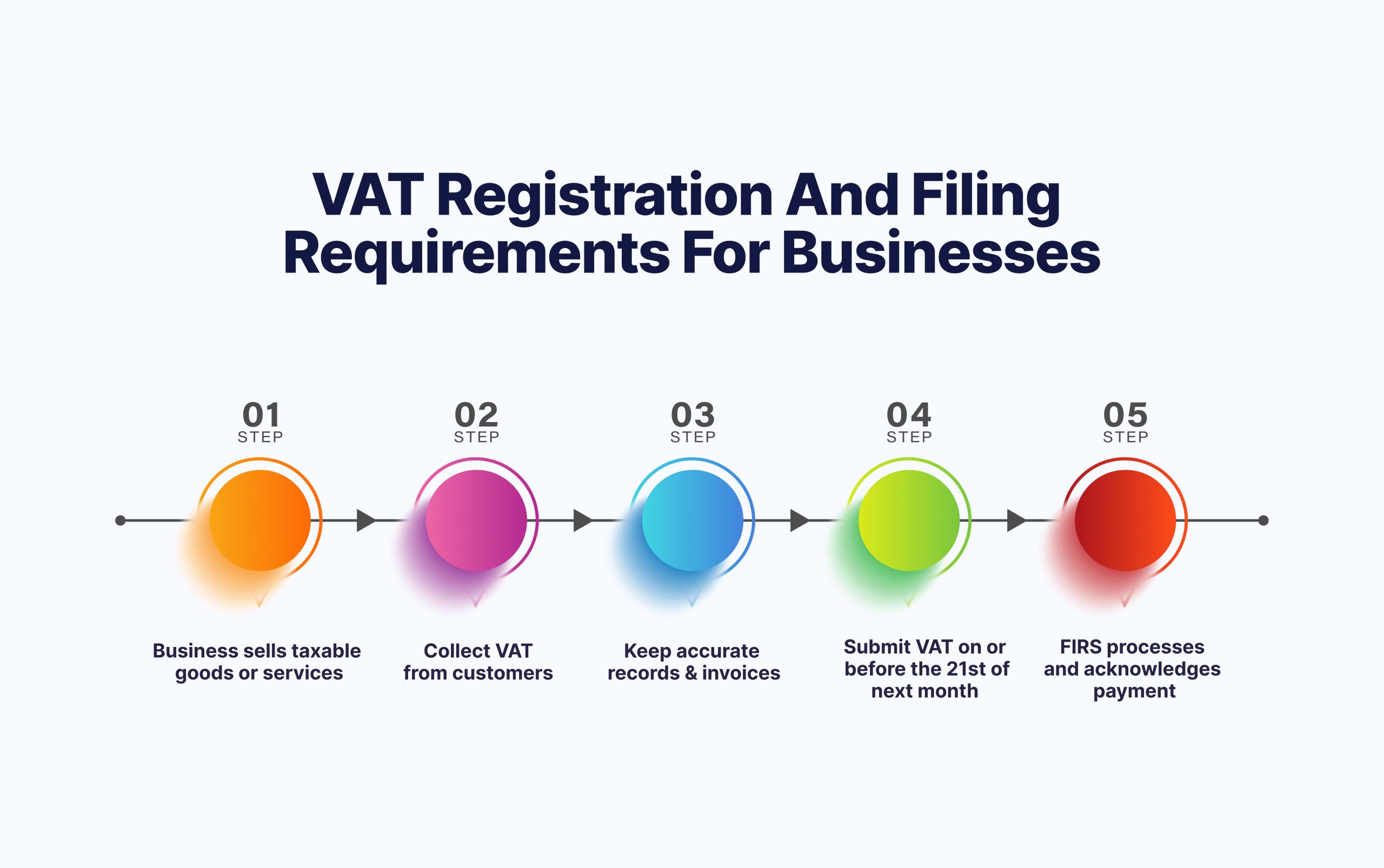
Once a business supplies taxable goods or services, it may need to register for VAT and begin charging the applicable rate on eligible transactions. Thereafter, the business must keep accurate records of sales, purchases, and VAT collected.
Who Needs to Register for VAT?
VAT obligations generally apply to:
- Companies selling taxable goods
- Service providers
- Partnerships
- Sole proprietors engaged in taxable activities
- Foreign businesses supplying taxable digital or physical services to Nigerian customers
Therefore, if your business provides taxable products or services, you should understand your VAT responsibilities from the outset rather than waiting for a compliance issue to arise.
When Must VAT Returns Be Filed?
Registered businesses must file VAT returns every month.
The filing deadline is: On or before the 21st day of the month following the transaction month.
For example:
- VAT collected in January should be filed by 21 February.
- VAT collected in June should be filed by 21 July.
As a result, maintaining accurate records throughout the month makes filing significantly easier.
What Records Should Businesses Keep?
To support VAT filings, businesses should retain:
- VAT invoices
- Sales records
- Purchase receipts
- Evidence of VAT payments
- Import documentation where applicable
Moreover, organised records can help businesses resolve disputes, support audits, and accurately calculate input and output VAT.
Why Compliance Matters
Late filing or inaccurate returns can attract penalties and additional charges. Consequently, businesses should establish a routine for tracking taxable sales, calculating VAT correctly, and submitting returns before the deadline.
For many small business owners, VAT compliance can seem complex at first. Nevertheless, once you understand the registration requirements, filing schedule, and calculation process, managing Nigeria VAT becomes much easier.
Quick VAT Calculator Examples for Businesses
Whether you run a retail store, consulting firm, online business, or service-based company, quick calculations can help you estimate VAT charges before issuing an invoice. Therefore, keeping a simple reference table can save time and improve accuracy.
Using the current VAT rate in Nigeria of 7.5%, here are some common examples:
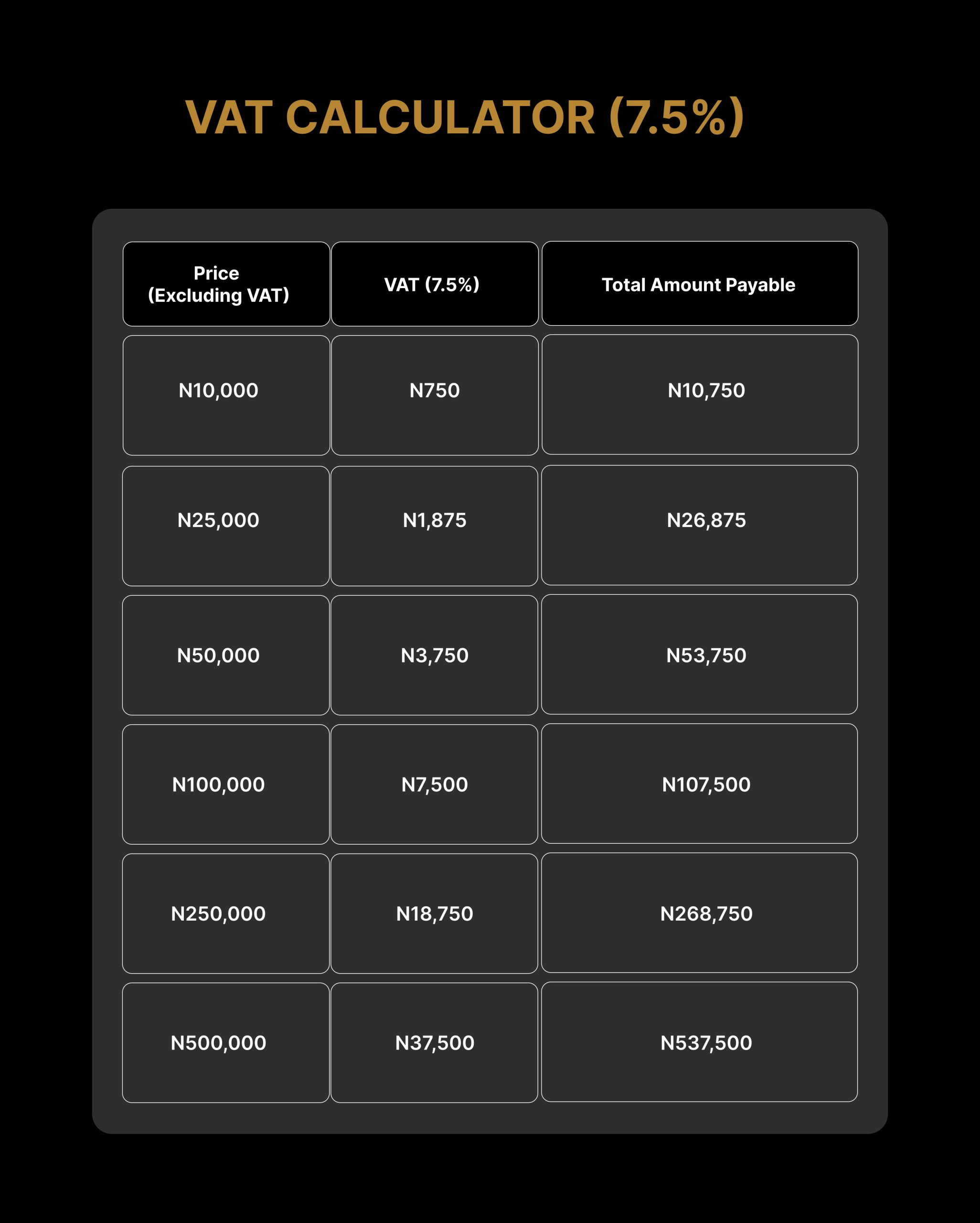
For example, if a graphic designer charges a client ₦50,000 for a project, the VAT amount would be ₦3,750. Consequently, the total invoice value becomes ₦53,750.
Likewise, if a retailer sells taxable goods worth ₦250,000, the VAT charged would be ₦18,750, bringing the final amount payable to ₦268,750.
How to Use a VAT Rate in Nigeria Calculator
A VAT calculator or VAT rate in Nigeria calculator follows the same principle:
- Enter the original price.
- Apply the 7.5% VAT rate.
- Add the VAT amount to the original price.
- Display the final payable amount.
Alternatively, if you already have a VAT-inclusive amount, divide the total by 1.075 to determine the original price before VAT. Although online calculators can speed up the process, understanding the underlying formula helps business owners verify figures and avoid invoicing errors.
Conclusion
The value added tax rate in Nigeria currently stands at 7.5% and applies to most taxable goods and services. However, some supplies qualify for zero-rating, while others remain VAT-exempt. Therefore, understanding these distinctions can help businesses price products correctly, maintain compliance, and avoid costly mistakes.
In addition, knowing how to calculate VAT, keep proper records, and file returns on time can simplify tax management and improve business operations. Whether you are a business owner, freelancer, or consumer, a solid understanding of Nigeria VAT rules can help you make more informed financial decisions.
FAQ
1. What is the current VAT rate in Nigeria in 2026?
The current VAT rate in Nigeria in 2026 is 7.5%. The rate applies to most taxable goods and services supplied within Nigeria. Unless new legislation changes the rate, businesses should continue calculating VAT at 7.5%.
2. When was VAT changed to 7.5% in Nigeria?
Nigeria increased VAT from 5% to 7.5% on 1 February 2020 through the Finance Act 2019. Since then, the standard VAT rate has remained unchanged.
3. What is the new VAT rate?
At the time of writing, there is no new VAT rate. The standard value added tax rate in Nigeria remains 7.5%.
4. How do you calculate VAT and WHT in Nigeria?
To calculate VAT, multiply the taxable amount by 7.5%.
For example:
- Service value = ₦100,000
- VAT = ₦7,500
Withholding Tax (WHT) works differently because it depends on the type of transaction and the applicable withholding tax rate. Therefore, businesses should first determine the relevant WHT rate before making deductions. Where both taxes apply, businesses generally calculate VAT on the taxable value and then deduct the applicable WHT according to Nigerian tax regulations.